
Major Scottish Government investment in University of Stirling led tree planting initiative
Forth Climate Forest is an ambitious project that aims to plant 16 million trees by 2033, helping adapt the Forth Valley to the extremes of flooding and temperatures that climate change will bring.
/filters:format(webp)/filters:no_upscale()/prod01/cdn/media/stirling/news/news-centre/2025/nov-25/1200X630TCVFCF.jpg)
Work to plant a new woodland in Sauchie got underway during National Tree Week, supporting a University of Stirling led initiative to plant millions of trees across the region.
Forth Climate Forest is an ambitious project that aims to plant 16 million trees by 2033, helping adapt the Forth Valley to the extremes of flooding and temperatures that climate change will bring.
To mark National Tree Week a group coordinated by The Conservation Volunteers (TCV), the initiative’s delivery partner in Clackmannanshire, supported the creation of a new woodland near Beechwood in Sauchie - where over 6000 native trees will be planted.
The Scottish Government has provided £460,000 for the Forth Climate Forest initiative this year - supporting the delivery of social and environmental benefits across the Forth Valley region.
Natural powerhouse
Climate Action Secretary Gillian Martin said: “I am delighted that the Scottish Government has been able to fund this important work by Forth Climate Forest, which not only helps tackle the nature crisis, but brings our communities, especially our young people closer to nature.
“Our forests and woodlands are a natural powerhouse, and one of the most important resources we have to tackle the climate and nature emergencies. This initiative will help to create new woodland, which will increase local biodiversity and provide a place for local communities to enjoy nature.”
As well as purifying the air, the forests will absorb carbon from the atmosphere, create places for wildlife to thrive and deliver social and health benefits for local people.
The project works with communities to increase tree canopy in neighbourhoods that have the fewest trees, as well as supporting farmers and landowners to develop and plant new native woodlands.
The Beechwood site is one of many that will see the Forth Climate Forest plant thousands of trees over the coming year, with communities highlighting locations where they feel they are most needed.
Other planned activities include creating Wee Forests in four secondary schools in the region, planting trees along school routes, providing free fruit and flowering trees for gardens, and helping local football clubs to plant trees for goals.
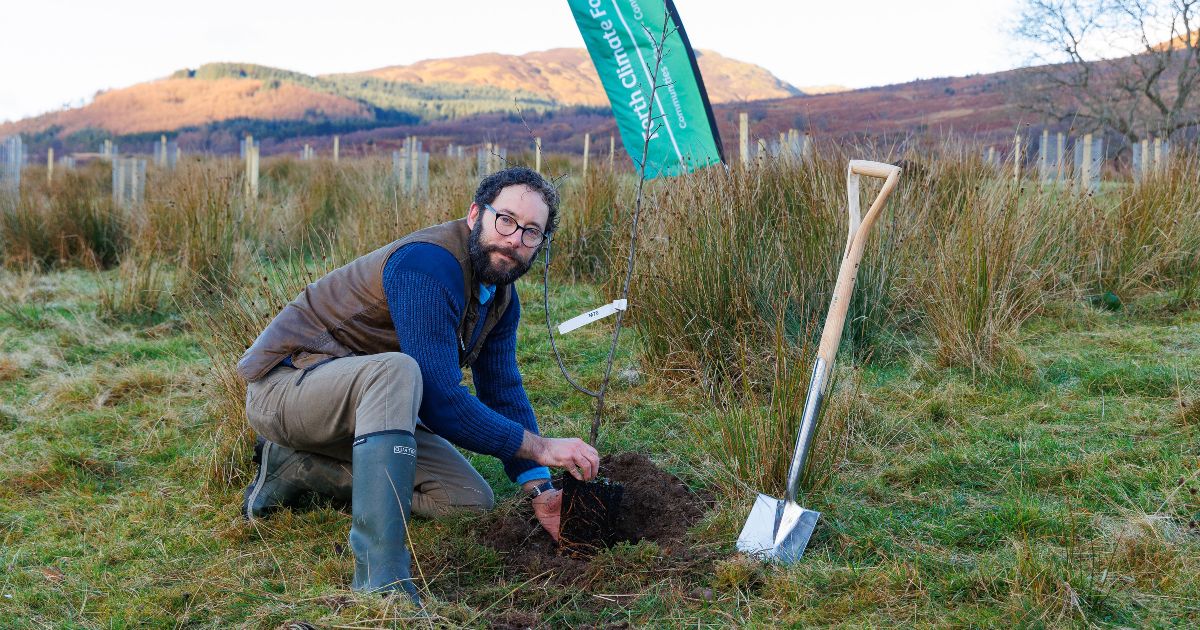 Doug Worrall, Director of Forth Climate Forest.
Director of Forth Climate Forest, Doug Worrall, said: “It is exciting to be starting our tree planting activities for the next year during National Tree Week.
“Between now and March thousands of trees will be planted across the Forth Valley. The work of the Forth Climate Forest is about planning for the future. The trees we plant now will provide multiple benefits for future generations.”
Forth Climate Forest covers Clackmannanshire, Falkirk and Stirling Council areas, as well as a large part of Loch Lomond and The Trossachs National Park.
It is a partnership initiative, hosted by the University of Stirling through Scotland’s International Environment Centre (SIEC).
SIEC is supported by £5m in funding from the UK Government and £17m from the Scottish Government through the Stirling and Clackmannanshire City Region Deal.
UN Sustainable development goals
The University of Stirling is ranked among the top 200 institutions in the world for its contribution to meeting the United Nations Sustainable Development Goals (SDGs). The research or activity detailed above relates to the following SDGs.