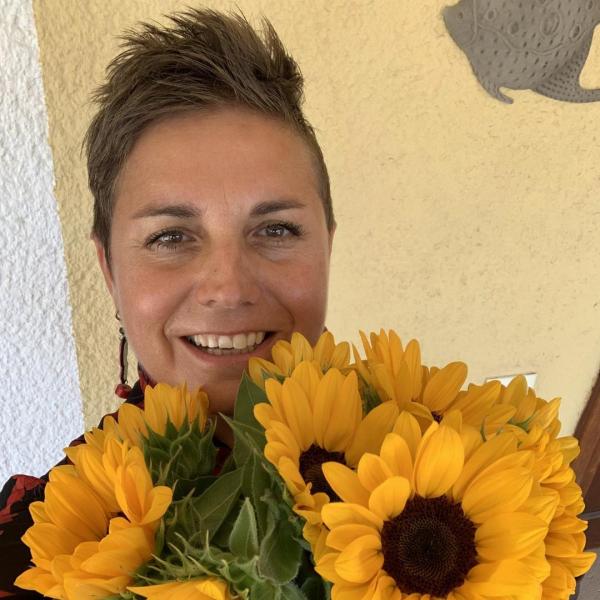
Hi, I'm Sabrina. I love the outdoors, laughter, journeys, and connecting with others - including other animals, rivers, and mountains.
"How are you (but then really?)" and "Can you please tell me a story?" are two of my favourite questions. Stories of all kinds can inspire, bring us joy, connection, and help us heal. They can move us to act. One of my favourite quotes captures something I believe deeply:
"What you do speaks so loudly that I cannot hear what you say." Ralph Waldo Emerson
For me, this is about flourishing - for people, other animals, and this beautiful planet we share. It comes from how we show up, not just what we say.
I've been in this field since 1989, starting as a volunteer, working at the intersection of animal, human, and planetary wellbeing. I'm a psychologist (BSc Psychology, MSc Animal Studies, PhD Psychology - University of Stirling), founder and director of AnimalConcepts, and the inaugural Director of Animal Welfare for WAZA. Through AnimalConcepts and InterBeing, our platform connecting professionals and organisations across six continents, I work with zoos, aquariums, sanctuaries, universities, and governments on everything from animal training and environmental enrichment to staff resilience, organisational culture, and the quiet weight of caring for animals for a living.
Two ideas sit at the heart of everything I do:
To care well for others, we must design systems that allow us to remain human.
To care well for others, and about collective goals and a shared purpose, we have to take care to give care.
I've keynoted and facilitated over 500 events worldwide, written policies and guidelines for governments, and published across academic and popular platforms. I co-edited Optimal Welfare of Ageing Wild Animals in Human Care with Dr Sarah Chapman (Springer Nature, 2023), and I'm currently working on books about human wellbeing in animal care and conservation professions, animal behaviour training and ethics, and one very close to my heart: everything I wish I'd known when I started, working title Wild About Self-Care.
I often wear a button that says "I love stories." It starts the best conversations, at conferences, on planes, everywhere in between. If you have a story about an animal you've cared for, a friendship with a favourite animal, or something you've done for animals, people, or the planet that made your heart sing, I'd genuinely love to hear it.